


Oh Shoot! Plants
Aloe Vera (Aloe barbadensis)
SKILL LEVEL
01
Easy
BEST SPOT
02
Very Bright Light with Some Direct Sun
GROWTH POTENTIAL
03
Often around 30 to 60cm tall indoors, becoming wider as pups develop.
CHILD & PET SAFETY
04
Harmful if eaten. Keep away from pets and young children.
Regular price
£9.99 GBP
Unit price
per
Taxes included.
Shipping calculated at checkout.
Out of stock
Couldn't load pickup availability
- UK Houseplant Delivery
- Collect from the Congleton Jungle
- Real Plant Care & Support Before and After Purchase
Aloe vera, also known as Aloe barbadensis, is a familiar houseplant with a useful way of handling dry spells. Its leaves store water, giving it a reserve between drinks and making it more forgiving of an occasional missed watering.
A bright kitchen, living room or home office can make a good home for it. Position matters more than the room itself, so choose somewhere close to a window with space for the leaves to spread. It is a useful option for a sunny spot where some of your leafier Jungle residents might struggle.
Looking after it is mostly about getting to know how quickly its compost dries in your home. That will change through the year, with longer gaps between drinks usually needed in winter. Once settled, it can grow alongside you for years without needing a complicated care routine.


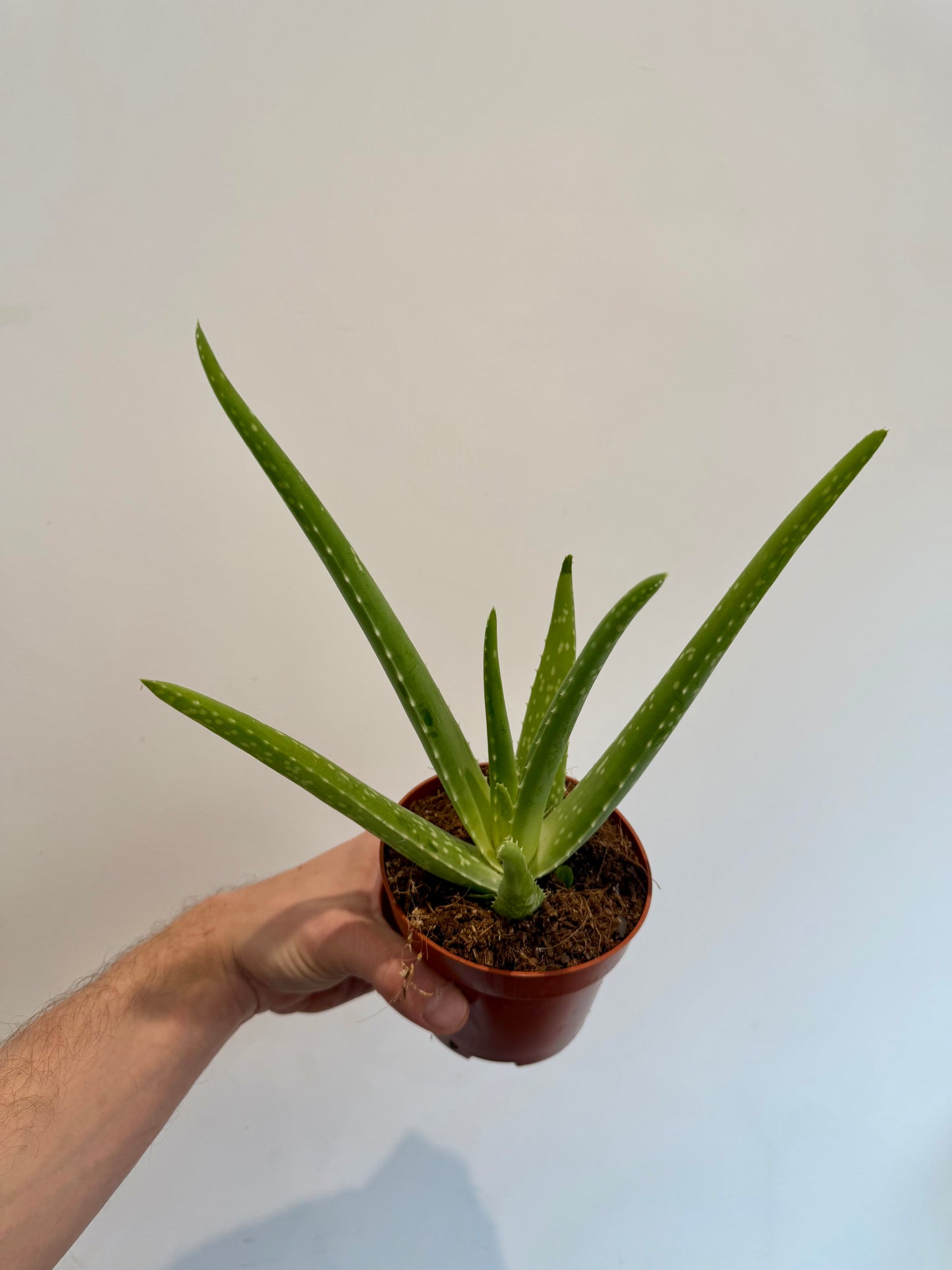
SKILL LEVEL01
Easy
BEST SPOT02
Very Bright Light with Some Direct Sun
GROWTH POTENTIAL03
Often around 30 to 60cm tall indoors, becoming wider as pups develop.
CHILD & PET SAFETY04
Harmful if eaten. Keep away from pets and young children.
🌿
Healthy Plant Guarantee
Carefully health and pest checked before leaving the Jungle
📦
Tracked & Insured Nationwide UK Delivery
Packed carefully for the journey
📍
Collect in Congleton
Pick up from our High Street Jungle
💬
Real Plant Advice
Before and after your purchase
GET TO KNOW YOUR PLANT
More About the Aloe Vera Aloe barbadensis
 A closer look at the Aloe Vera
ORIGIN
Northern Oman on the Arabian Peninsula, growing in dry habitats.
GROWTH HABIT
Upright rosette forming succulent that gradually develops a clump of pups around the base.
GROWTH POTENTIAL INDOORS
Around 60cm tall in leaf, with a similar or greater spread as pups develop. Flower stalks can rise above the foliage.
TIME TO MATURITY
Often around 5 to 10 years to develop a substantial mature clump, depending on starting size and growing conditions.
FLOWERING
Tubular yellow to greenish yellow flowers grow along a tall stalk above the leaves.
FLOWERING IN UK HOMES
Uncommon in an ordinary UK home. Mature plants with exceptionally bright conditions have the best chance, although healthy aloes can grow happily for years without flowering.
LIFESPAN
Can live for many years with good care, producing pups as it matures.
SEASONAL BEHAVIOUR
Evergreen indoors, with slower growth and lower watering needs during darker winter months.
OH SHOOT PLANT KNOWLEDGE
Good to Know
Long Time Leaves
Tap Water Diva?
Leaf Cleaning & Dusting
PLANT SPECIFICS
Additional Information
!
DID YOU KNOW?
THE GOOD STUFF
Why You'll Love It
A GREAT MATCH FOR
Perfect For
01
OH SHOOT TOP GROWING TIP
KEEP YOUR JUNGLE HAPPY
Aloe Vera Care Guide
☀️ Light+
💧 Water+
🚰 Water Quality+
💦 Humidity+
🌡️ Temperature+
🪴 Soil & Substrate+
Need the right ingredients? Explore our Jungle Mixes.
🌱 Feeding+
🔄 Repotting+
✂️ Pruning+
✨ Leaf Cleaning & Dusting+
🌿 Propagation+
🍂 Seasonal Growth+
⚠️ Common Problems+
🐛 Pests+
🐾 Child & Pet Safety+
STILL GOT QUESTIONS?
Aloe Vera FAQs
NEED ANOTHER PAIR OF EYES?