Skip to product information
1 of 5

Oh Shoot! Plants

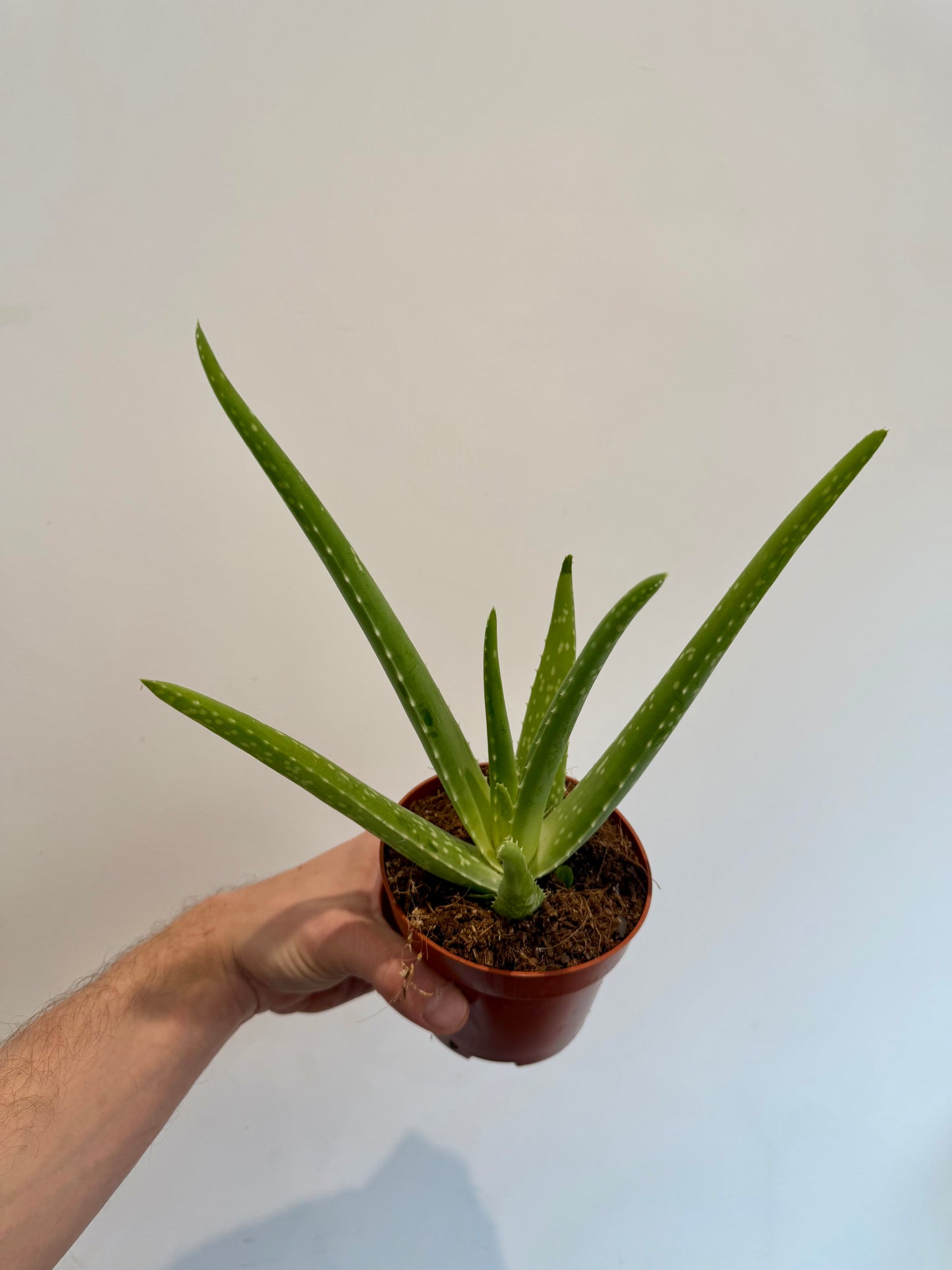
Aloe Vera (Aloe Barbadensis)

Aloe vera is an easy care succulent, best known for the gel inside its thick green leaves. A good choice for a sunny windowsill, it suits beginners and anyone whose Jungle already keeps them busy.

Give it plenty of bright light, introduce direct sunshine gradually and let the compost dry properly between drinks. No misting, no daily fuss.

🌿
Skill Level Easy
☀️
Best Spot Very Bright Light with Some Direct Sun
🪴
Growth Potential Often around 30 to 60cm tall indoors, becoming wider as pups develop.
⚠️
Pet and Child Safety Harmful if eaten. Toxic to cats and dogs if ingested.
Regular price £9.99 GBP
Taxes included. Shipping calculated at checkout.

Low stock: 1 left

Size
  • UK Houseplant Delivery
  • Collect from the Congleton Jungle
  • Real Plant Care & Support Before and After Purchase

Aloe vera, also known as Aloe barbadensis, is a familiar houseplant with a useful way of handling dry spells. Its leaves store water, giving it a reserve between drinks and making it more forgiving of an occasional missed watering.

A bright kitchen, living room or home office can make a good home for it. Position matters more than the room itself, so choose somewhere close to a window with space for the leaves to spread. It is a useful option for a sunny spot where some of your leafier Jungle residents might struggle.

Looking after it is mostly about getting to know how quickly its compost dries in your home. That will change through the year, with longer gaps between drinks usually needed in winter. Once settled, it can grow alongside you for years without needing a complicated care routine.

View full details
SKILL LEVEL 01
Easy
BEST SPOT 02
Very Bright Light with Some Direct Sun
GROWTH POTENTIAL 03
Often around 30 to 60cm tall indoors, becoming wider as pups develop.
CHILD & PET SAFETY 04
Harmful if eaten. Keep away from pets and young children.
🌿 Healthy Plant Guarantee Carefully health and pest checked before leaving the Jungle
📦 Tracked & Insured Nationwide UK Delivery Packed carefully for the journey
📍 Collect in Congleton Pick up from our High Street Jungle
💬 Real Plant Advice Before and after your purchase

GET TO KNOW YOUR PLANT

More About the Aloe Vera Aloe Barbadensis

Aloe vera grows new leaves from the centre, with the oldest leaves sitting around the outside. Young leaves may have pale spotting that becomes less obvious as they mature.

Over time, the plant becomes wider and can produce pups around its base. What starts as a single nursery plant can gradually fill out into a sizeable clump.

You can leave the pups together or separate them once they have their own roots. Both approaches work well, depending on the space you have and how you would like your aloe to grow.

You may also see it sold as Aloe barbadensis Miller. That is another botanical name for Aloe vera, rather than a different variety.

Aloe Vera (Aloe Barbadensis) A closer look at the Aloe Vera
ORIGIN Northern Oman on the Arabian Peninsula, growing in dry habitats.
GROWTH HABIT Upright rosette forming succulent that gradually develops a clump of pups around the base.
GROWTH POTENTIAL INDOORS Often around 30 to 60cm tall indoors, becoming wider as pups develop.
TIME TO MATURITY Often around 5 to 10 years to develop a substantial mature clump, depending on starting size and growing conditions.
FLOWERING Tubular yellow to greenish yellow flowers grow along a tall stalk above the leaves.
FLOWERING IN UK HOMES Uncommon in an ordinary UK home. Mature plants with exceptionally bright conditions have the best chance, although healthy aloes can grow happily for years without flowering.
LIFESPAN Can live for many years with good care, producing pups as it matures.
SEASONAL BEHAVIOUR Evergreen indoors, with slower growth and lower watering needs during darker winter months.

OH SHOOT PLANT KNOWLEDGE

Good to Know

01 WHERE IT COMES FROM

Habitat & Environment

Aloe vera is native to northern Oman on the Arabian Peninsula and has been grown across warmer parts of the world for centuries.

Its fleshy leaves store water, helping it cope with periods of dry weather. Those growing conditions give us a useful starting point for looking after it at home.

Plenty of light, freely draining compost and time to dry between drinks help it settle in. This part of the Jungle likes things a little drier.

02 LEAF LONGEVITY

Long Time Leaves

Aloe vera sits towards the longer lasting end of our Long Time Leaves scale. Healthy leaves remain useful as the plant grows, storing water and supporting fresh growth.

A small scar, crease or dry tip does not automatically mean a leaf needs removing. Keep firm green foliage and remove leaves when they are dead, rotten or completely finished.

Your aloe can have a few well worn leaves and still be doing nicely.

03 WATER CHECK

Tap Water Diva?

Aloe vera sits towards the relaxed end of our Tap Water Diva scale. Ordinary UK tap water is normally suitable.

In hard water areas, mineral deposits can gradually appear around the pot or on the compost. Occasional rainwater use and fresh compost when needed can help manage buildup.

For most aloes, good drainage and time to dry between drinks make the biggest difference. No special water menu needed.

04 KEEP IT LOOKING GOOD

Leaf Cleaning & Dusting

A soft, slightly damp cloth or our Microfibre Houseplant Dusting Gloves work well for removing dust. Support each leaf as you wipe and take care around the toothed edges.

For tighter gaps, a soft brush can help. Use a gentle touch and avoid leaving water sitting in the centre of the plant.

There is no need for leaf shine. A quick dust now and then is plenty for this Jungle resident.

PLANT SPECIFICS

Additional Information

Give your aloe a little space around its pot. The leaves can spread beyond the edges as it grows, and regular knocks can leave creases or broken tips.

When moving it, support the container rather than the leaves. A damaged tip will not regrow, but the remaining green part can still be useful.

If you fancy growing another aloe, rooted pups are the best starting point. Detached leaves are not a reliable propagation method for this plant.

!

DID YOU KNOW?

Aloe vera is also known as Barbados Aloe, even though it is native to the Arabian Peninsula.

It has travelled a long way to become such a familiar windowsill plant.

THE GOOD STUFF

Why You'll Love It

Aloe vera is a familiar favourite that fits easily into a bright home. Plenty of light and a chance to dry between drinks go a long way with this one.

🌿 Thick green leaves give you greenery throughout the year

💧 Stores water in its leaves, helping it cope with a missed drink

☀️ Makes good use of a sunny windowsill

🪴 Gradually grows into a fuller clump

🌱 Established plants can produce pups around the base

💚 Rooted pups can become new plants to keep or share

🙌🏼 Happy in normal household humidity without regular misting

A good addition when you fancy growing your Jungle without adding another thirsty plant to the watering round.

A GREAT MATCH FOR

Perfect For

Aloe vera is a great match for:

☀️ Bright windowsills with some sunshine

🏡 Sunny kitchens, living rooms and home offices

🌱 Anyone starting their first succulent collection

🪴 Plant owners looking for less frequent watering

🌿 Growing alongside other sun loving succulents

🙌🏼 Busy households with a suitable bright spot

💚 Anyone who enjoys growing baby plants to keep or share

Choose somewhere with room for the leaves to spread, away from curious pets and little hands.

01

OH SHOOT TOP GROWING TIP

Check below the compost surface before watering. The top can look dry while the roots still have plenty of moisture. Lifting the pot helps too. As it dries, it becomes noticeably lighter.

Once you get to know the difference, deciding when your aloe needs a drink becomes much easier.

KEEP YOUR JUNGLE HAPPY

Aloe Vera Care Guide

☀️ Light+

Aloe vera grows best in a very bright position close to a window. Some direct sunshine supports strong growth once the plant has had time to adjust.

A south or west facing window can work well. An unobstructed east facing window may also be suitable, depending on how much light reaches it.

Introduce brighter conditions gradually. If strong summer sunshine starts scorching the leaves, a little filtering can help. Pale, lengthening growth can suggest the plant would appreciate more light.

💧 Water+

Allow the compost to dry throughout before watering again. Check below the surface and get used to how light the pot feels when dry.

When it is ready, water the compost thoroughly and let the excess drain away. Empty the saucer or decorative outer pot afterwards, and try to keep water out of the centre of the leaves.

Your aloe will usually need longer between drinks during darker, cooler months. Checking the compost each time helps you find a rhythm that suits your home.

🚰 Water Quality+

Aloe vera sits towards the relaxed end of our Tap Water Diva scale. Ordinary UK tap water is normally suitable.

In hard water areas, mineral deposits can gradually appear around the pot or on the compost. Occasional rainwater use and fresh compost when needed can help manage buildup.

For most aloes, good drainage and time to dry between drinks make the biggest difference. No special water menu needed.

💦 Humidity+

Ordinary household humidity is fine for Aloe vera. It does not need misting or a humidifier, which makes it easy to fit into most bright rooms.

Reasonable airflow helps, particularly after watering. A closed terrarium would stay too damp for it, so give this one an open spot in the Jungle.

🌡️ Temperature+

Normal indoor temperatures of around 15 to 27°C suit Aloe vera well.

Choose a position away from cold draughts and direct contact with chilly window glass.

For straightforward indoor care, aim to keep it above 10°C and protect it from frost. In a cooler room, the compost usually dries more slowly, so allow more time between drinks.

🪴 Soil & Substrate+

Aloe vera grows well in cactus and succulent compost that drains freely and gives its roots time to dry between drinks. This part of the Jungle likes things a little drier.

If your mix holds onto moisture for a long time, adding horticultural grit or pumice can help improve drainage and keep it more open.

A pot with drainage holes makes watering easier to manage. Found a decorative pot you love without holes? Keep your aloe in its nursery pot inside it, then empty any water left at the bottom after watering.

🌱 Feeding+

Aloe vera is a light feeder. A cactus and succulent fertiliser used according to its label can support growth during spring and summer.

Feed when the plant is healthy and actively growing. If it is very dry, has damaged roots or has paused for winter, wait until conditions improve.

If growth seems slow, check the light and roots first. Sometimes a brighter spot is more helpful than an extra feed.

🔄 Repotting+

Repot when the roots and pups have filled the pot, or when the compost has become compacted and slow to drain. Spring is a useful time, as brighter days support fresh growth.

Choose a pot with drainage holes that is only slightly larger than the root system. Terracotta can help the compost dry more readily, although other materials work well with suitable watering.

Keep the leaf bases above the compost at roughly their original planting depth. If roots are damaged during the move, allow the wounds to dry before watering.

A modest increase in pot size gives your aloe room to grow while making moisture easier to manage.

✂️ Pruning+

Aloe vera needs very little pruning. Remove completely dry outer leaves, rotten tissue and finished flower stalks with clean tools.

Firm green leaves can stay, even if they have a small scar or crease. If a tip has broken, it will not regrow, but the rest of the leaf may still be useful to the plant.

✨ Leaf Cleaning & Dusting+

A soft, slightly damp cloth or our Microfibre Houseplant Dusting Gloves work well for removing dust. Support each leaf as you wipe and take care around the toothed edges.

For tighter gaps, a soft brush can help. Use a gentle touch and avoid leaving water sitting in the centre of the plant.

There is no need for leaf shine. A quick dust now and then is plenty for this Jungle resident.

🌿 Propagation+

Separating pups is the easiest way to grow more Aloe vera.

Wait until a pup has several leaves and its own roots. Gently lift the clump from its pot and tease the plants apart, using a clean blade if they are firmly joined.

Allow fresh cuts to dry and seal before planting into a small pot of freely draining cactus compost. Keep the young plant bright and allow any damaged roots to dry before watering.

Spring and summer are usually the easiest times to do this indoors. You can also leave pups with the parent until you have the space, pots or plant loving friends ready for them.

🍂 Seasonal Growth+

Spring

Longer days usually bring fresh leaves and stronger growth. Your aloe may start using water more quickly, so check the compost a little more often while still letting it dry throughout between drinks.

Summer

Warm, bright conditions can support steady growth and pups around the base. If you fancy giving yours a summer outside, introduce outdoor light gradually and choose a sheltered position protected from prolonged rain.

Autumn

As daylight decreases, growth usually slows and the compost takes longer to dry. Let the plant guide you towards longer gaps between waterings.

Winter

Keep your aloe in its brightest suitable spot, away from cold glass and draughts. Water only when the compost has dried and pause feeding while growth is resting. A quieter few months is normal in many UK homes. Healthy, firm leaves are a reassuring sign, even when there is not much new growth to report.

⚠️ Common Problems+

Soft leaves and a mushy base

Compost that stays wet can damage the roots and allow rot to develop, particularly in cooler conditions. Pause watering and gently check the roots and base. Healthy growth may still be salvageable, depending on how far the damage has spread.

Thin or wrinkled leaves

This can happen when the plant has used its stored water. If the compost is dry and the roots are healthy, water thoroughly and let the excess drain. If the compost is already wet, check for root damage instead.

Long, pale or floppy growth

Your aloe may benefit from more light. Move it gradually towards a brighter position and watch the new leaves for improvement. Existing stretched leaves will keep their shape.

Brown patches after a move

A sudden increase in sunshine can scorch the leaves. Give the plant time to adjust to brighter conditions, filtering strong sun if needed. Existing marks will remain, but fresh growth can develop normally.

Dry lower leaves

An occasional oldest leaf drying out can be part of normal growth. If several leaves decline together, check the compost, roots and base to see whether something else is contributing.

Little or no new growth

Slower growth is common during darker months. If your aloe stays quiet through spring and summer, check how much light it receives, whether the roots are healthy and whether the pot has become crowded before increasing its feed.

🐛 Pests+

When checking your aloe, have a look around the leaf bases and between pups. Mealybugs can leave small patches of white, cottony material, while scale insects may look like attached bumps on the leaves.

Aphids sometimes gather on tender growth or flower stems. Fungus gnats are more likely when compost stays damp, so checking how long the pot takes to dry can help.

If you spot something, keep the plant apart from the rest of your Jungle while you identify it. Choose a treatment suitable for succulents, follow its instructions and avoid leaving liquid pooled between the leaves.

🐾 Child & Pet Safety+

Choose a spot away from curious pets and young children that might chew the leaves.

Aloe vera is harmful if eaten and toxic to cats and dogs if ingested.

Its pointed tips and toothed edges are also worth keeping in mind when finding it a home or moving it around.

STILL GOT QUESTIONS?

Aloe Vera FAQs

Is Aloe barbadensis Miller the same as Aloe vera?

Yes. Aloe barbadensis Mill., often written Aloe barbadensis Miller, is another botanical name for Aloe vera. Miller refers to the botanist associated with that name, rather than a separate variety.

Is Aloe vera a cactus?

It is a succulent, but it belongs to a different family from cacti. Many enjoy similar growing conditions, which is why cactus and succulent compost works well for an aloe.

Is Aloe vera suitable for beginners?

Yes. It is a good starting point if you have a bright windowsill and prefer a plant that needs less frequent watering. Getting the position right makes the rest of its care much easier.

Where should I put my Aloe vera?

Close to a bright window, with some direct sunshine once it has adjusted. A sunny kitchen, living room or home office can work well. Leave a little room around the pot so the leaves can spread comfortably.

Can Aloe vera grow in direct sunlight?

Yes, although it helps to introduce stronger sunshine gradually. A plant used to a shaded position can scorch if moved straight into intense summer sun behind glass.

Can I keep Aloe vera in a darker room?

It will usually grow better closer to a bright window. In low light, new leaves can become longer, paler and less sturdy. A suitable grow light is another option if natural light is limited.

How often should I water Aloe vera?

Let the compost dry throughout before watering again. The time between drinks will change with light, temperature, pot size and season, so checking the compost is more helpful than following a fixed schedule.

How can I check whether the compost is dry?

A wooden skewer can help you check below the surface. If it comes out damp with moist compost attached, give the pot a little longer. Lifting the pot also helps you learn how much lighter it feels when dry.

Should I water my aloe from the top or bottom?

Either can work. From the top, pour onto the compost rather than into the centre of the leaves. If watering from below, remove the pot once the compost has taken up water and allow it to drain fully.

Can I use tap water?

Yes. Ordinary UK tap water is normally suitable for Aloe vera. Good drainage and suitable gaps between waterings matter more than choosing a special water source.

Does Aloe vera need misting?

It is happy without misting. Normal household humidity suits it well, and watering the compost when needed takes care of its moisture needs.

What compost does Aloe vera need?

A freely draining cactus and succulent compost is a good starting point. If your mix stays damp for a long time, horticultural grit or pumice can help keep it more open.

Can I keep my aloe in a decorative pot without drainage holes?

Yes, by keeping it in a nursery pot inside the decorative one. Take it out to water, allow it to drain and empty any water that collects in the outer pot.

When should I feed Aloe vera?

Feed lightly while it is actively growing in spring and summer, using a cactus and succulent fertiliser according to its label. Pause feeding if growth stops during winter or the plant is recovering from root problems.

Why are my aloe leaves thin or wrinkled?

The plant may have used some of the water stored in its leaves. If the compost is dry and the roots are healthy, a thorough drink can help. If the compost is already wet, check the roots before watering again.

Why are the leaves soft or see through?

Excess moisture or cold damage can cause soft, translucent leaves. Check the compost, roots and base, along with any recent exposure to cold. These clues will help you work out what needs changing.

Why is my Aloe vera turning red or brown?

Stronger light, prolonged dryness and temperature changes can all affect leaf colour. Firm leaves with a reddish tint need a different response from soft brown tissue, so check the texture as well as the colour.

Why is my aloe leaning or falling over?

It may be growing towards the light, becoming top heavy or producing weaker leaves in a shaded position. If the whole plant feels loose or the base is soft, it is worth checking the roots too.

Why are the bottom leaves drying out?

An occasional oldest leaf drying out can be part of normal growth. If several leaves are declining together, check the compost and roots, particularly if the base also feels soft.

Will a broken aloe leaf repair itself?

The damaged edge can dry and seal, but the missing part will not grow back. A firm green leaf can still be useful, so a small break or crease does not always mean it needs removing.

What are the little plants around the base?

They are pups, also called offsets. They can stay beside the parent for a fuller pot or be separated once they have their own roots. Either way, your Aloe collection may be growing.

Can I grow a new aloe from a leaf?

A detached leaf is not a reliable way to grow another Aloe vera. Rooted pups give you a much better chance of success.

When should I repot my aloe?

When the roots and pups have filled the available space, the plant becomes unstable or the compost stops draining well. Choose a pot only slightly larger than the root system.

How big does Aloe vera grow indoors?

Many indoor plants reach around 30 to 60cm tall, with a wider spread as pups develop. Its eventual size depends on light, age and growing conditions.

Will Aloe vera flower indoors?

It can, although flowering is uncommon in an ordinary UK home. Mature plants with very strong light have the best chance. A healthy aloe can grow happily for years without flowering.

Does Aloe vera die after flowering?

It does not normally die after flowering. Once the flower stalk has finished and dried, remove it carefully and continue with the plant’s usual care.

Can Aloe vera go outside in summer?

Yes, during suitable warm weather. Introduce outdoor light gradually and choose a sheltered spot protected from prolonged rain. Bring it back indoors before cold nights arrive.

Does Aloe vera stop growing in winter?

Growth often slows or pauses as UK daylight levels fall. Keep it bright, reduce watering to match the slower drying compost and wait for fresh growth before restarting feeding.

Is Aloe vera safe for pets and children?

It is harmful if eaten and toxic to cats and dogs if ingested. Choose a position away from pets and young children that might chew the leaves.

NEED ANOTHER PAIR OF EYES?

Need More Help With Your Aloe Vera?

Not sure whether your aloe needs a drink, a brighter spot or a little help with its roots? Floppy leaves and colour changes can have more than one cause, so a few photos are a good place to start.

Bring it into our Congleton plant shop in Cheshire or send us a message with photos of the whole plant, its pot and where it lives.

We’re here for proper plant advice before and after you buy. Every Jungle has a few learning moments.

Visit The Plant Clinic